
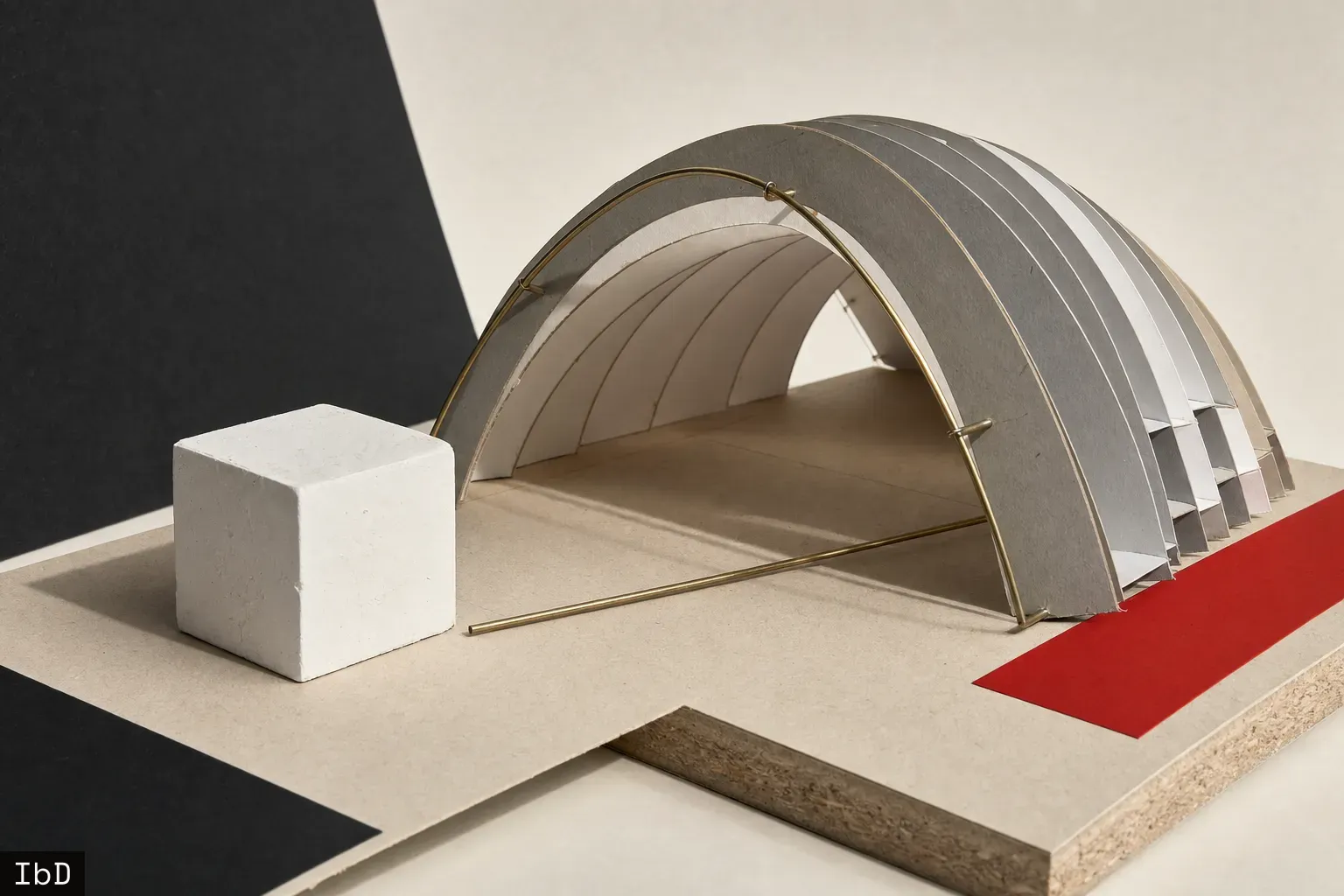
A concrete cube shows how strong a material can be when it is cast in a mould, compacted and cured under controlled conditions. A sprayed, printed or fabric-cast shell is made in none of those ways.
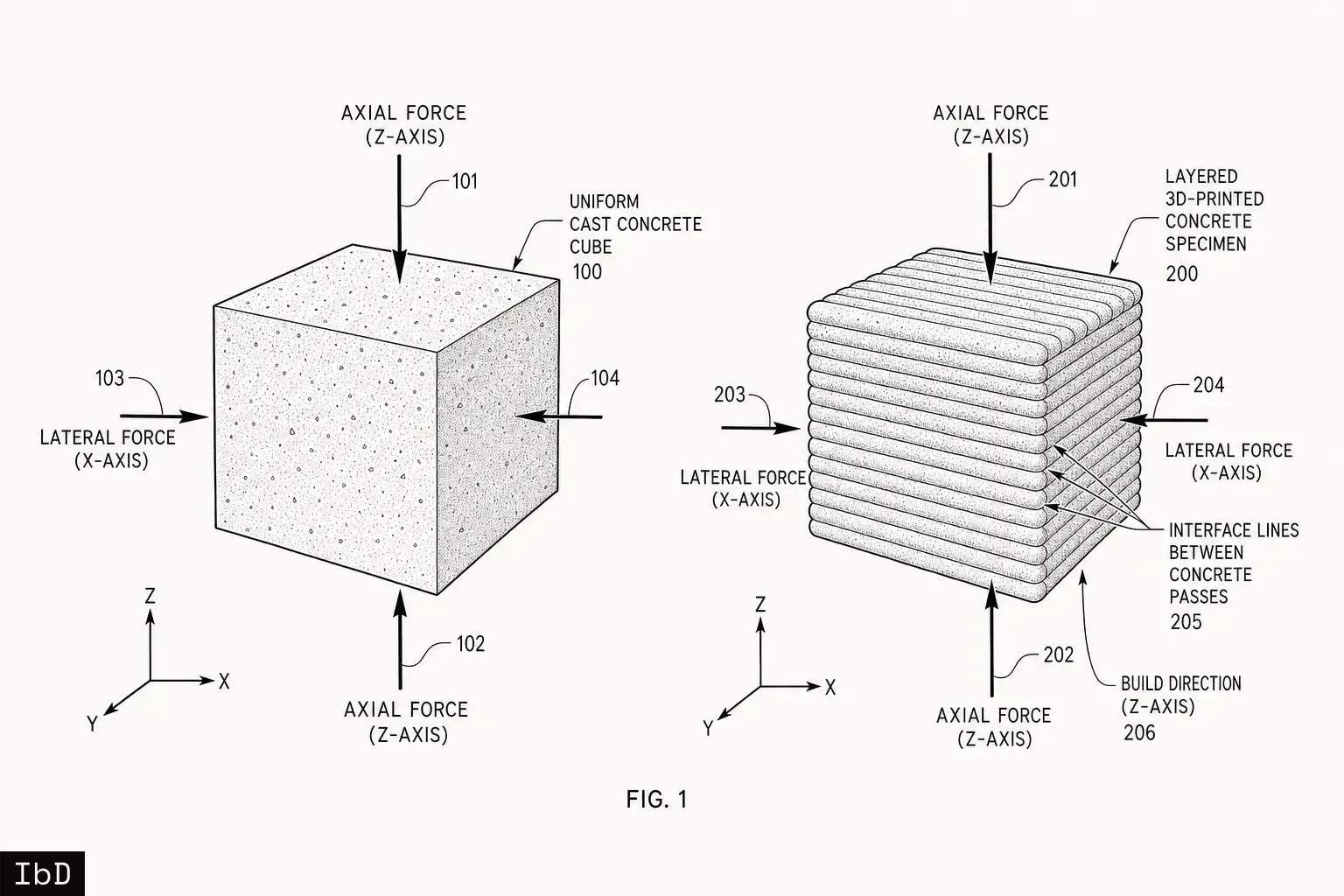
Concrete standards are built around the cube for good reason. For conventionally cast concrete, the cube is a reliable proxy for the material in the structure, because the structure is made the same way the cube is. Once the process changes, that relationship weakens, and so does the meaning of the test. A 2025 review in RILEM Technical Letters lays out where the standards stop working for concrete 3D printing, and much of its reasoning applies to any unconventional shell process.
Standards assume a process
Codes for reinforced concrete carry a set of assumptions that are rarely stated because they are almost always true. The concrete is placed in a formwork. It is compacted, so voids are driven out and the material is close to uniform. It is poured continuously or with controlled construction joints. Reinforcement sits in a cage at a known cover. Strength is the same in every direction.
Layered and formwork-free processes break most of these at once. There may be no formwork, or one that flexes. The concrete is not compacted. It goes down in passes, with an interface at every pass. Reinforcement goes wherever the process allows. Strength depends on direction. The cube still measures something real, but it no longer describes the structure.
The RILEM review maps the gap
The RILEM review, published in February 2025, sets out where conventional standards fail for concrete that is layered, not compacted and built without formwork. It groups what a standard would need into areas: material, process, machine, durability, execution and documentation.
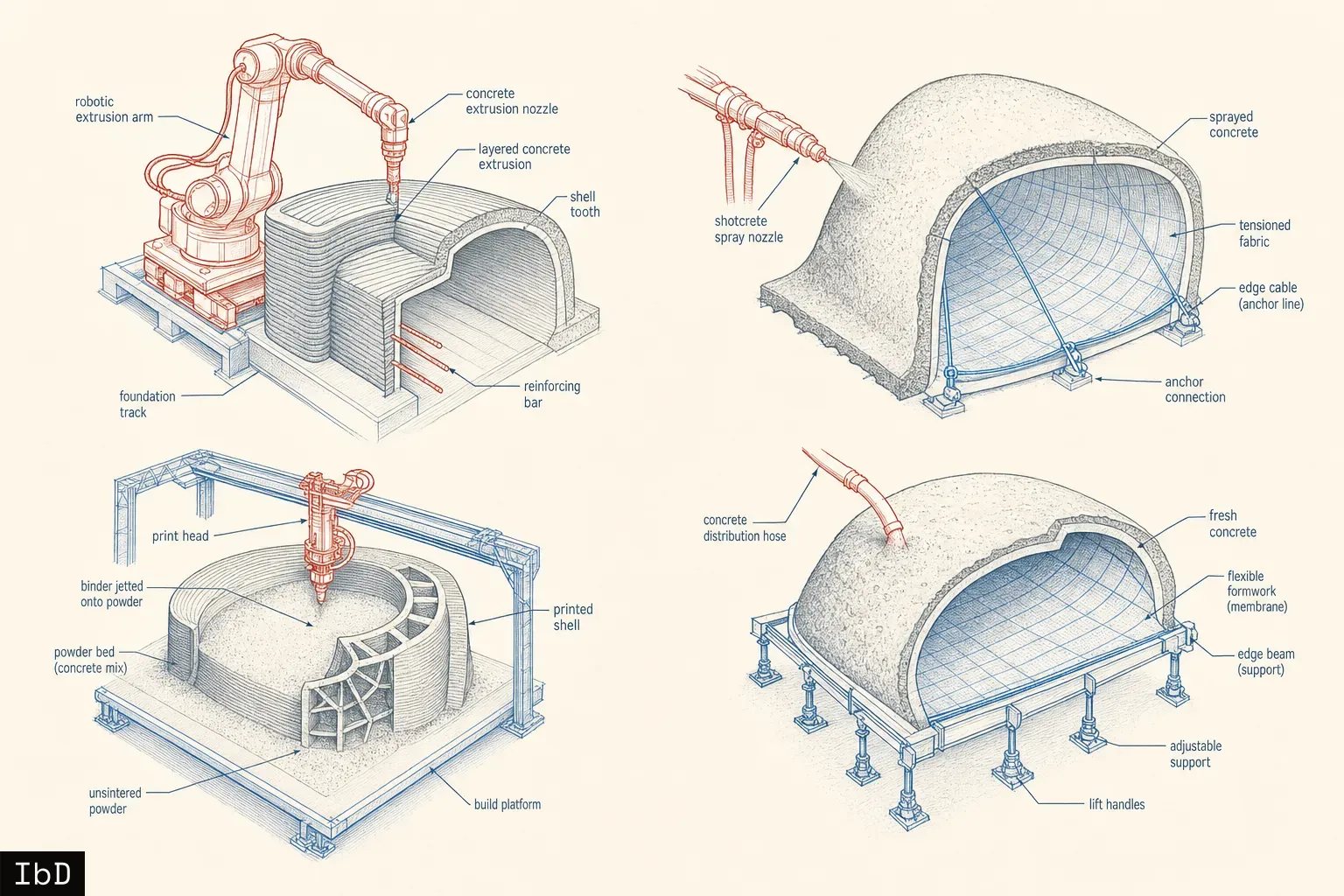
Two of its observations matter most for shells. First, some printing processes have reached high technology readiness, yet approval is still granted project by project. The technology has moved faster than the framework for accepting it. Second, the processes differ too much from each other for a single strength-based qualification to cover them. There is no universal test matrix waiting to be written, because extrusion, spraying, powder-bed printing and casting on flexible formwork fail in different ways.
The review does not propose a new structural system. It is a peer-reviewed map of the gap. That is exactly what makes it useful.
What actually governs
For an unconventional shell, the properties that decide whether it performs are mostly properties of the process rather than the mix.
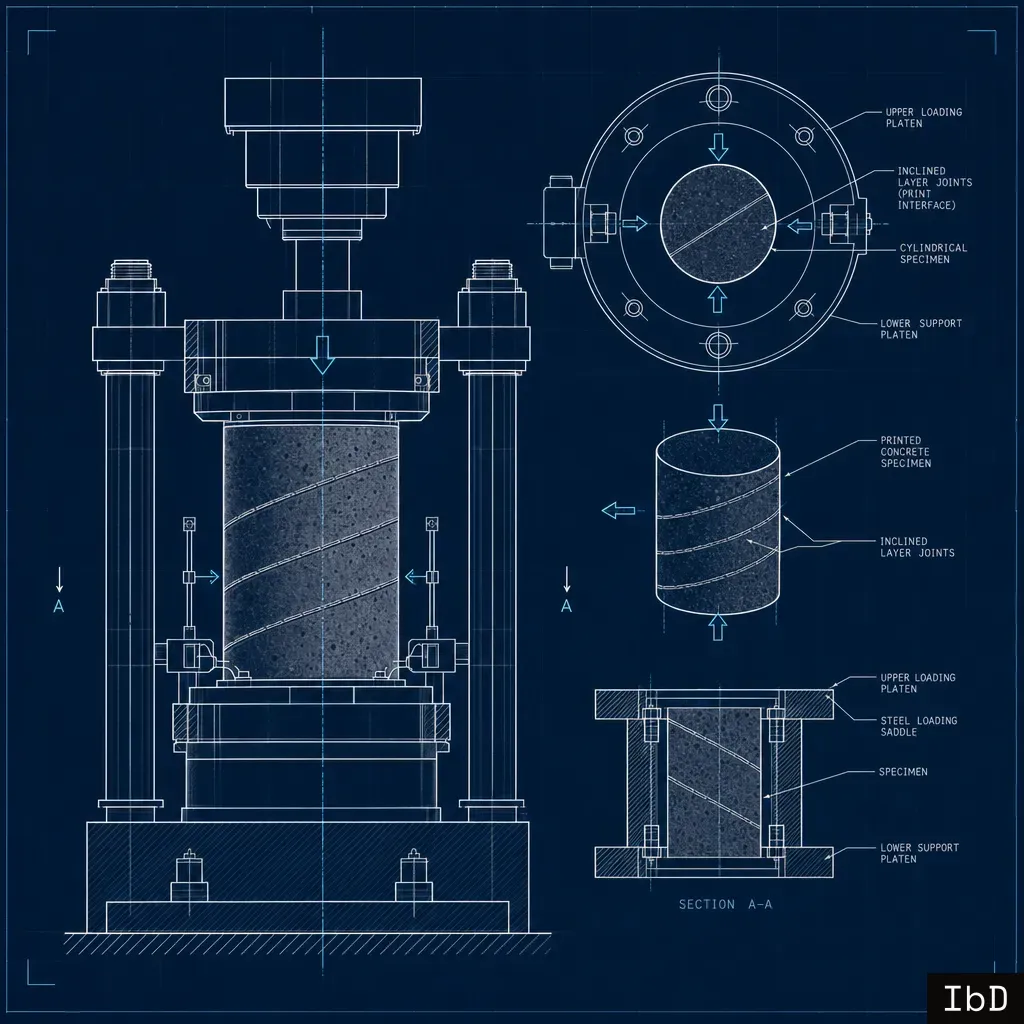
- Layer anisotropy. Interfaces between passes are planes of potential weakness, so strength must be tested in the directions that matter. Tor Alva's directional slant-shear testing is a model for this.1
- Interlayer time. The bond between one pass and the next depends on how long the first was left before the second arrived. Too short and the lower layer cannot carry the load; too long and the bond weakens.
- Fresh-state cohesion. The material's early-age stiffness and cohesion decide whether a layer holds its shape on a curved form in the first hour. Recent modelling from BAM and TU Eindhoven shows how sensitive stability is to these values.
- Effective bonded thickness. The thickness that actually works structurally can be less than the nominal one, once rebound, poor bond and surface defects are accounted for.
- Geometric deviation. In a shell, shape carries load, so measured curvature, thickness and support position belong in the evidence alongside material tests.
- Curing and interruptions. Site climate, curing regime and any unplanned stop in the process change the material that ends up in the structure, and none of them show up in a cube cured in a tank.
The evidence is a record
If the process is what governs, the evidence for a shell has to describe the process. The useful form for this is a dossier. It sets out the materials and their early-age behaviour, the equipment and the people operating it, the geometry and how it was set out, where the reinforcement went and when, the sequence and timing of application, the tests and what they measured, the deviations recorded by scan or survey, and the criteria each was judged against.
The dossier is not paperwork added at the end. It is the shell's qualification. A process that is documented well enough can be repeated, checked and improved, and that is what turns one successful shell into a method someone else can trust.
In India, the route is project by project
Indian practice does not yet have a ready compliance route for printed, sprayed-on-fabric or segmented concrete shells. Indian concrete codes are written around conventionally cast, compacted concrete tested by cube, like most codes elsewhere. An unconventional shell has to be accepted on its own evidence, through an engineer of record prepared to stand behind it.
That is a real constraint, and it is also an opening. Where there is no standard, the projects that document their process rigorously are the ones that define what good evidence looks like. Every carefully recorded shell becomes a precedent, and enough of them become the basis for a standard.
What excites me most here is how little of this needs a machine. It needs disciplined measurement, a clear record and the patience to test the things that actually govern.
A cube proves a mix. Only a record proves a shell.
References
- Standardization aspects of concrete 3D printing (RILEM Technical Letters, February 2025)
- Tor Alva reinforcement and testing strategy (ETH Zurich, April 2025)
- Fresh-concrete buildability model (BAM / TU Eindhoven preprint, September 2026)
Footnotes
-
ETH Zurich, Department of Civil, Environmental and Geomatic Engineering (D-BAUG), Setting new standards for 3D-printed concrete construction (2025-04-11) — primary source. "To find out the degree to which the joints between layers weaken the concrete, Kaufmann's group established a modified slant shear test, which involves applying uniaxial compression to a material sample until it shears off. By repeating such experiments with the layer joints arranged at different angles they obtained crucial information on the mechanical impact of interlayer joints." ↩