

Every large organisation runs on a few dozen people whose judgement is consulted far beyond their role. Little of that judgement is written down, and most of it leaves when they do.
The people are easy to name. The procurement head who knows which supplier struggles every monsoon. The finance controller who remembers why the last market exit took three years instead of one. The operations veteran who can tell, from a single slide, that a plan has been tried before and why it stalled. Their knowledge reaches the organisation through phone calls, corridor conversations and favours. It is rationed by their calendar, and much of it retires with them.
The knowledge that matters does not write down well
Documentation programmes capture what is easy to document: process, policy, the steps of a procedure. The knowledge that settles a hard decision is a different kind. It is a sense of which regulator reads a clause strictly, which vendor's delivery promise to discount, which of three plausible plans carries a risk nobody has put on a slide. It lives as precedent and pattern, and it tends to surface only when someone asks the right person the right question.
That produces two costs. Key-person risk is the visible one. Decision latency is the quieter one. Questions wait for the right person to be free, or are answered by whoever is nearest, because the person who actually knows sits in another function, another city, or another year.
Decisions are recorded without their reasons
Organisations record what they decided with great care. Board minutes, approval chains and signed memos capture the outcome. Far less captures the reasoning: the options that were weighed, the risk someone raised and was overruled on, the dissent that turned out to be right.
A new leader inheriting a function inherits its policies but rarely its precedent. They can see that a category was exited in a given year. They usually cannot see the argument that led there, who disagreed, or whether the outcome vindicated the call. So old decisions get relitigated, and the most valuable signal an organisation produces goes unread: the record of where it followed its experts, where it overruled them, and which of those calls aged well.
The asset is the chain from advice to outcome
What deserves preserving is not expertise in isolation, and not decisions in isolation. It is the relationship between them: what the experts advised, where they disagreed, what was decided, and what happened next. Held together, those four things form an institutional record of how judgement was exercised and how it fared.
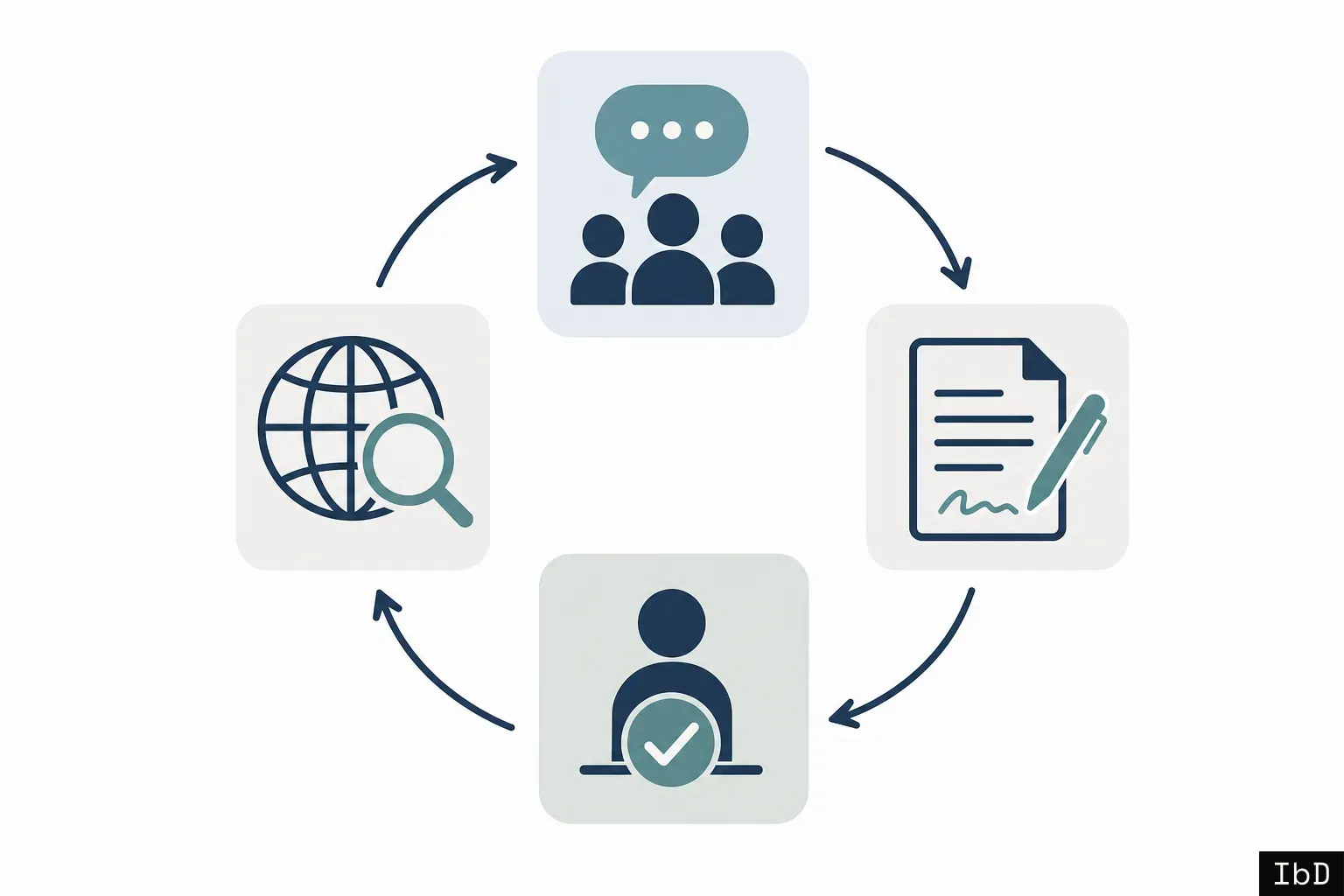
That record is the enduring asset. Expert agents, councils and provenance labels are mechanisms for producing it as a by-product of ordinary work, and each should be tested before it is trusted.
An interview captures testimony, and the expert decides what it is worth
A person's knowledge becomes queryable when it is turned into a private corpus that a language model reasons over. The corpus is built from structured interviews, seeded from the person's role history and the documents they have produced, and the agent answers from what that specific person actually said. The model supplies the reasoning; the corpus supplies the substance. An agent defined this way can be held to its sources in a way that a persona prompt ("answer as a senior procurement head would") cannot.
Interviews capture some things well: precedents, rules of thumb, the reasons behind past calls, the warning signs a person has learned to watch for. They capture other things poorly. Judgement in genuinely unfamiliar circumstances, the instinct that comes from reading a room, and knowledge the person does not know they hold will be thin or absent. An agent built from testimony is a record of someone's experience, and it should be treated as that rather than as a replica of the person.
The expert is therefore the first reviewer of their own agent. Before an agent joins any council, its subject is shown a set of its answers to realistic questions and marks each one: right, wrong, or right for the wrong reasons. Corrections go back into the corpus. The agent's declared scope is set by the expert, not inferred, and it can be narrowed as easily as widened. Capture is a process that continues over months, not a single sitting.
What this buys is modest and valuable. A manager in another geography can consult the procurement head's precedents at two in the morning. A project team that would never have known to ask can find out that a plan was tried before. With consent, the record remains available after the person has moved on. None of this replaces the person. It stops their experience from being rationed.
A council puts the outsider in the room
The more interesting unit is a council: several agents convened around one question.
Consider a proposal to consolidate three regional distribution centres into one. A council convenes: two supply-chain agents, one from real estate, one from finance, and one deliberate outsider from network infrastructure. The asker sees the composition of the room, described by function and collective experience, but not the names.
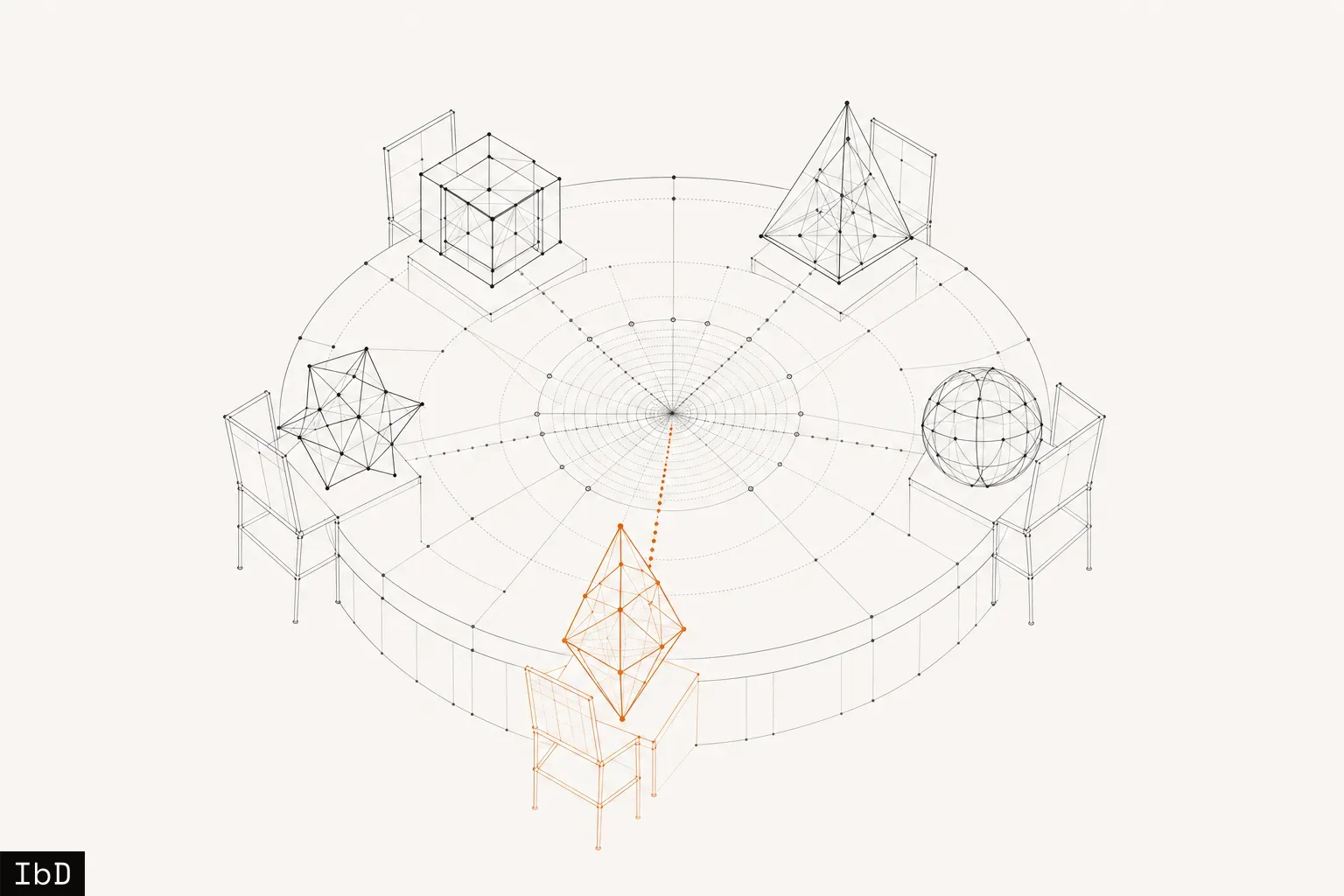
The council returns a majority verdict in favour of consolidation, on inventory pooling and lease savings. Beneath it sits one mapped dissent, from the outsider: a single site turns three independent routes into one point of failure, and the saving should be priced against the cost of a fortnight's closure. The finance agent revises its position in response.
Three features of this design matter to a leader.
Dissent is preserved rather than averaged away. A council produces one of three verdicts: consensus, majority with mapped dissent, or genuine split. A genuine split, honestly reported, is often the most useful thing a leader can learn before deciding: it points to a judgement call, missing evidence, or assumptions that conflict and have not yet been surfaced.
Anonymity weakens the pull of rank. When the asker cannot see names or titles, a contribution has to stand on what it says. Seniority stops being an argument in its own right, and people who would hesitate to challenge a senior view in a meeting can do so at lower cost.
Adjacent fields get a seat by default. Useful answers sometimes come from someone who has seen the same structure in a different domain. Ordinary operational decisions rarely get that perspective, because no one knows whom to invite. A council can include it routinely.
The finance agent's revision shows that the outsider's point was persuasive, not that it was correct. Agents sharing one underlying model can be moved by fluent argument as easily as by sound argument, so a required adversarial role argues the minority case before any convergence is accepted. Influence describes the deliberation. Whether the advice was good is assessed later, in review.
Provenance says where a claim came from, not whether it is right
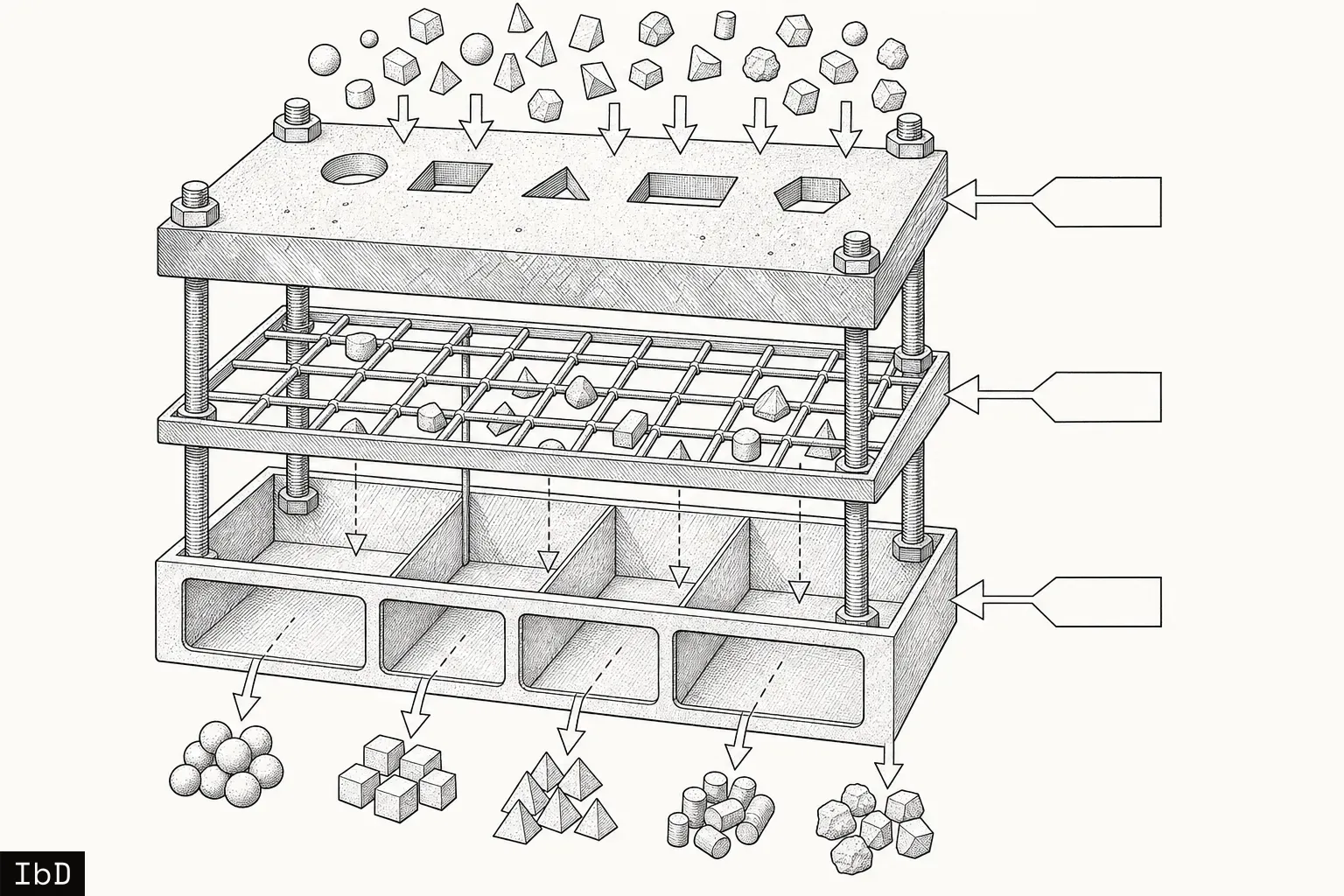
Each statement in a verdict carries one of three provenance labels.
Grounded. Retrieved from an expert's own corpus. The organisation's recorded experience, attributable and checkable.
Substrate. General reasoning by the model, with no basis in any expert's corpus. Labelled as such, so a reader can see where the organisation's own knowledge ends.
Gap. A question inside an expert's declared scope for which their corpus holds nothing. The system records the absence instead of filling it.
These labels establish origin. They do not settle reliability. A faithfully retrieved recollection can be out of date, shaped by one person's bias, or simply wrong. So a grounded claim is presented with what is needed to weigh it: when it was recorded, whether the expert has since reviewed it, and how similar advice has fared in decisions the ledger has already followed through to an outcome. Provenance makes a claim checkable. It is the start of trust, not a substitute for it.
The gap label does the most practical work. Every gap is logged and ranked by how often it is hit, and the most demanded become the agenda for the next interview with the relevant person. Capture acquires a demand signal: the corpus deepens where the organisation keeps asking, rather than where documentation happened to be easy.
The ledger closes the loop
Every question, verdict, decision and outcome is written to an immutable ledger, as separate entries. The council advises; a person decides; the ledger records both, and later records what happened. Decisions are kept distinct from verdicts by design, because the system's role is to advise and remember, not to decide.
Outcomes are not recorded automatically. Each decision names an owner, the assumptions being tested, the measures of success and a review date, and the ledger prompts the follow-up. In the consolidation example, the ledger holds the majority view, the outsider's dissent, the finance agent's revision, the decision the leadership team took, and, a year on, how the single site performed through its first disruption. A successor asking why the network looks the way it does receives the precedent behind the policy, not only the policy.
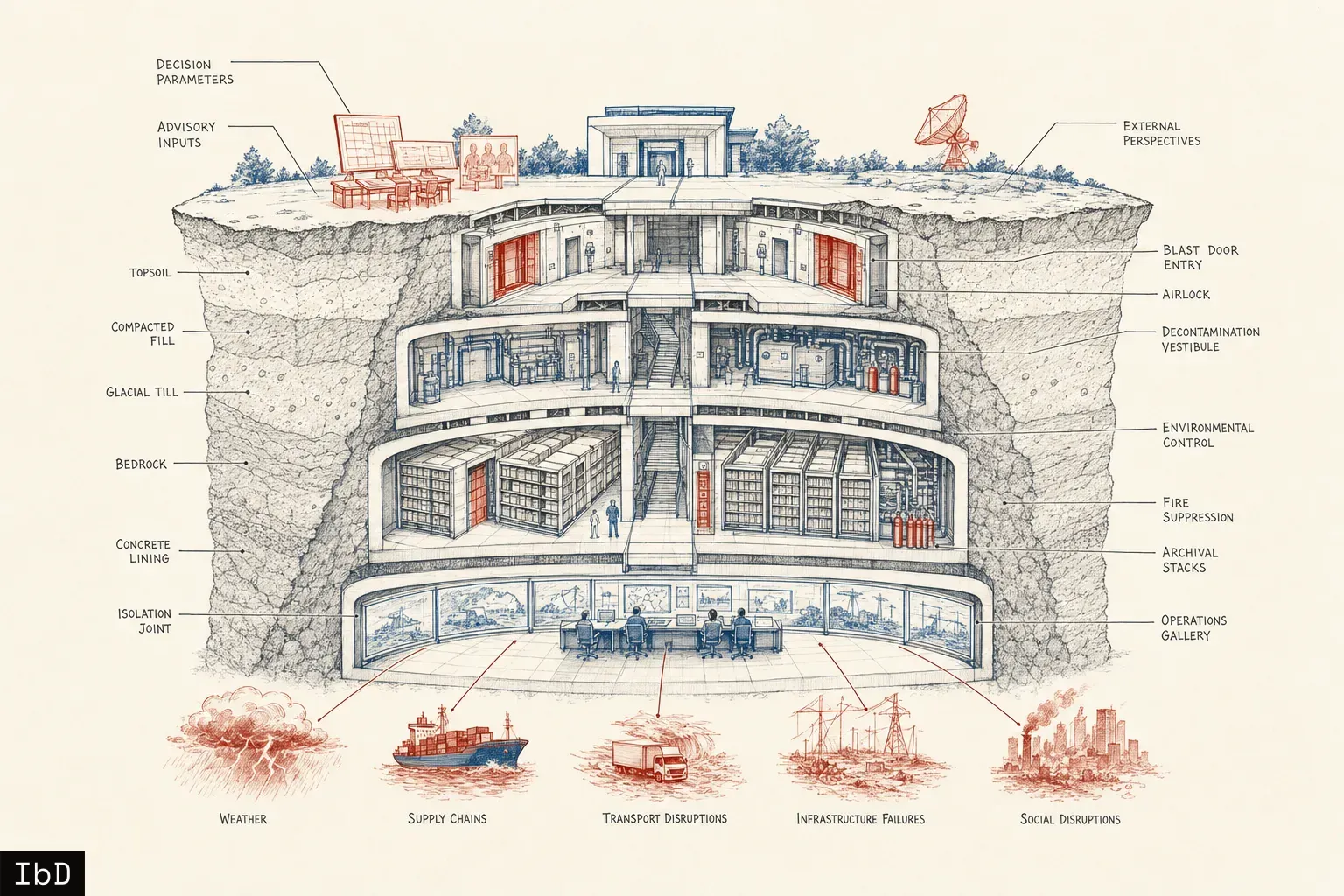
Outcomes provide evidence, but they do not grade advice on their own. A sound decision can meet bad luck, a weak one can be rescued by it, and the ledger only ever observes the course that was chosen, never the one that was rejected. Review must distinguish the quality of the original reasoning from execution, changed conditions and luck. Done that way, over enough decisions, the ledger begins to show which kinds of advice tend to hold up under review, whose dissents keep raising risks that later materialise, where the organisation consistently overrules its experts, and which decision classes split again and again, signalling a strategic question that has never been settled. The gap between advice and action becomes data, and that data gradually informs how much weight each source of advice deserves.
Acknowledgment keeps experts engaged
Experts contribute for a reason that is simpler than money: they want their knowledge to be seen and used. The system can make that visible. A contributor learns which teams or functions drew on their agent, without being shown the specific questions, which keeps confidential matters contained and gives no one a reason to tailor answers to particular askers.
This should stay an acknowledgment mechanism. Turning contribution scores into an input for performance review would invite exactly the gaming and attribution disputes the rest of the design works to avoid, and it is not needed for the system to deliver its main value. What leadership can reasonably take from it is a map of whose experience the organisation actually draws on, which is often different from what the organisation chart suggests.
Consent and containment come first
A system that holds people's judgement has to be governed as carefully as the people themselves.
Consent travels with every agent. An agent built from interviews its subject sat for and reviewed is distinguished from a surrogate modelled from the documents of someone unavailable or departed. The distinction is shown wherever that agent's contributions appear, and surrogates warrant correspondingly less weight.
Rights are separated. Anyone can request that an expert be captured. Creating and approving an agent are privileged, held by administrators and programme owners.
Controls govern what an answer reveals. The raw interview material is never exposed to the asker, to other agents, or to any external party. That alone is not enough, since a generated answer can disclose what its source contains. Access controls therefore apply to what an answer may reveal, not only to who can open the source material, and sensitive passages carry their permissions into every answer drawn from them.
The organisation owns what it builds. The protocol that defines an agent is open. The corpora and the ledger remain the organisation's own, in a form that does not depend on any single vendor.
Start with one function and test each claim
PROXY is a proposed design built on these principles: an open protocol for turning experts into queryable agents, a convening engine that assembles them into councils, and a ledger that records what they advised, what was decided and what followed. It is specified and ready to be piloted, not yet in production.
It starts narrow. One function, one recurring class of decision, and a small seed cohort that includes two or three senior people close to retirement, whose experience is most at risk of being lost and who often welcome a way to pass it on. Each sits for structured interviews and reviews their own agent before it is used.
Each mechanism is then treated as a hypothesis. Do experts judge their agents' answers to be faithful? Does a council's verdict beat asking the most relevant expert alone, as judged by people who know the domain? Do gap-driven interviews measurably reduce the share of substrate answers over time? The first councils are convened and reviewed by hand, and convening is automated only once those answers are good enough. The ledger, meanwhile, starts filling with the first question and does not depend on any of the other mechanisms being perfect. Even a modest council produces a record of advice, dissent and decision that the organisation did not have before.
Most organisations hold their most expensive meeting at a retirement party. It is the last time anyone thinks to ask.