
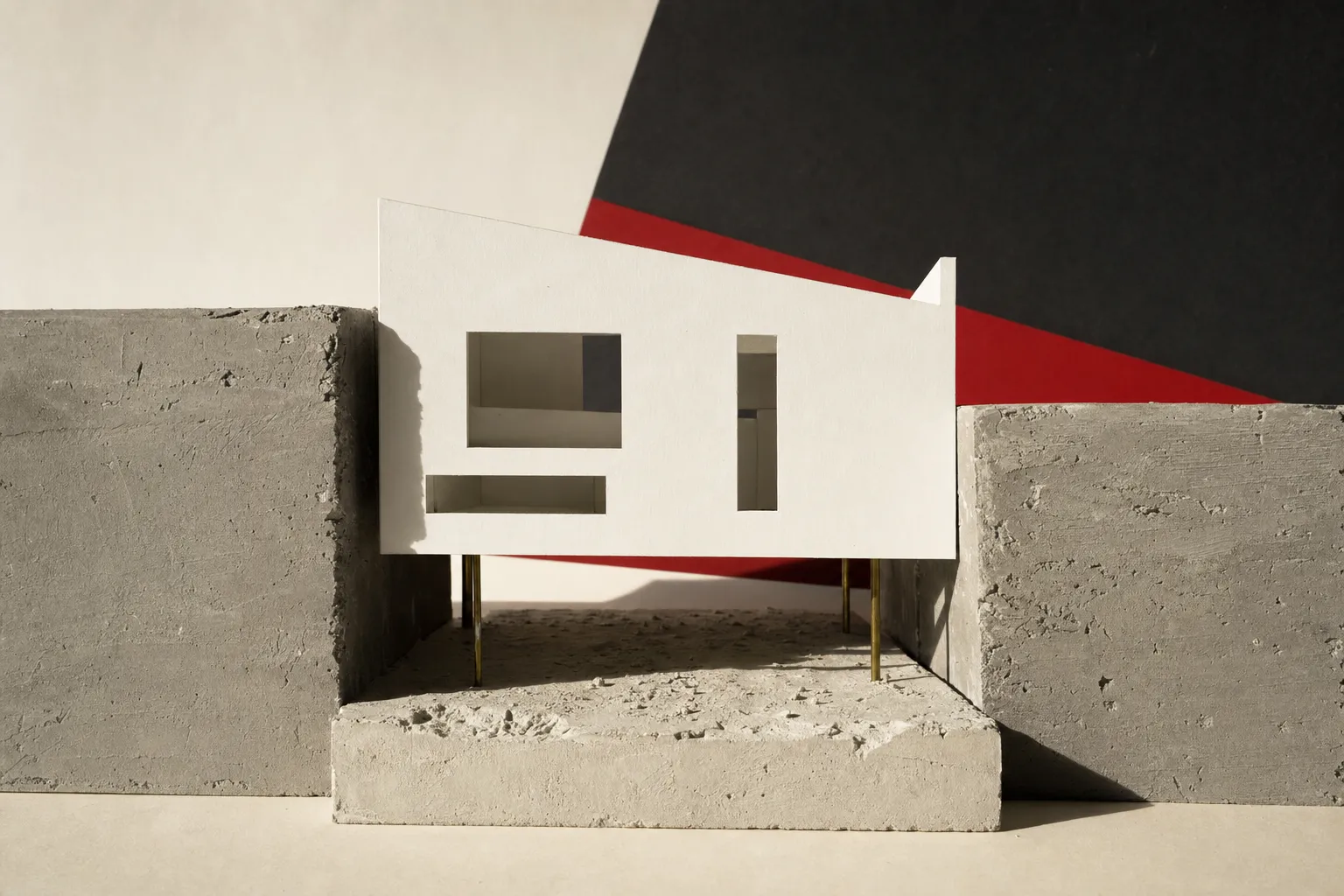
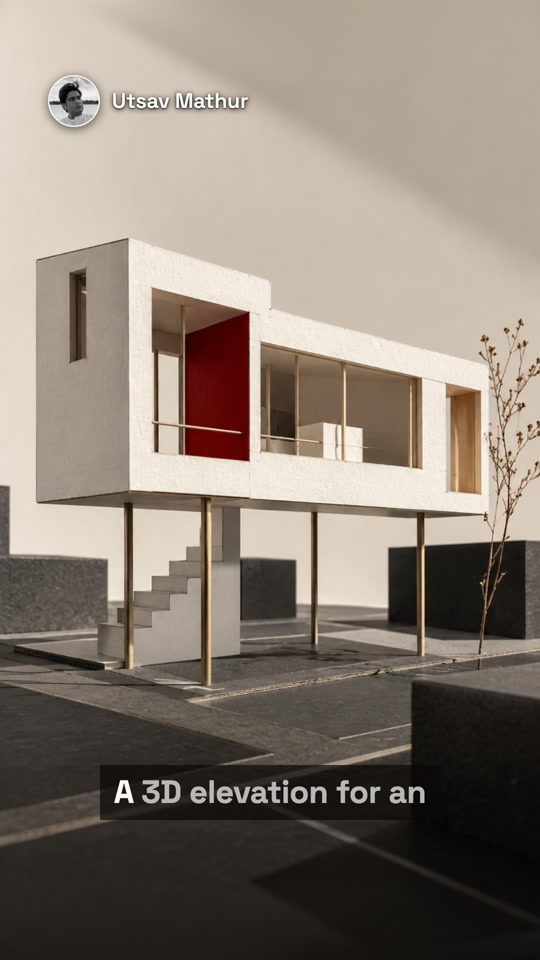
A 3D front elevation for an Indian house costs ₹1,999 and arrives in three days. The person who draws it never sees the plot, never meets the family, and never stands on the street.
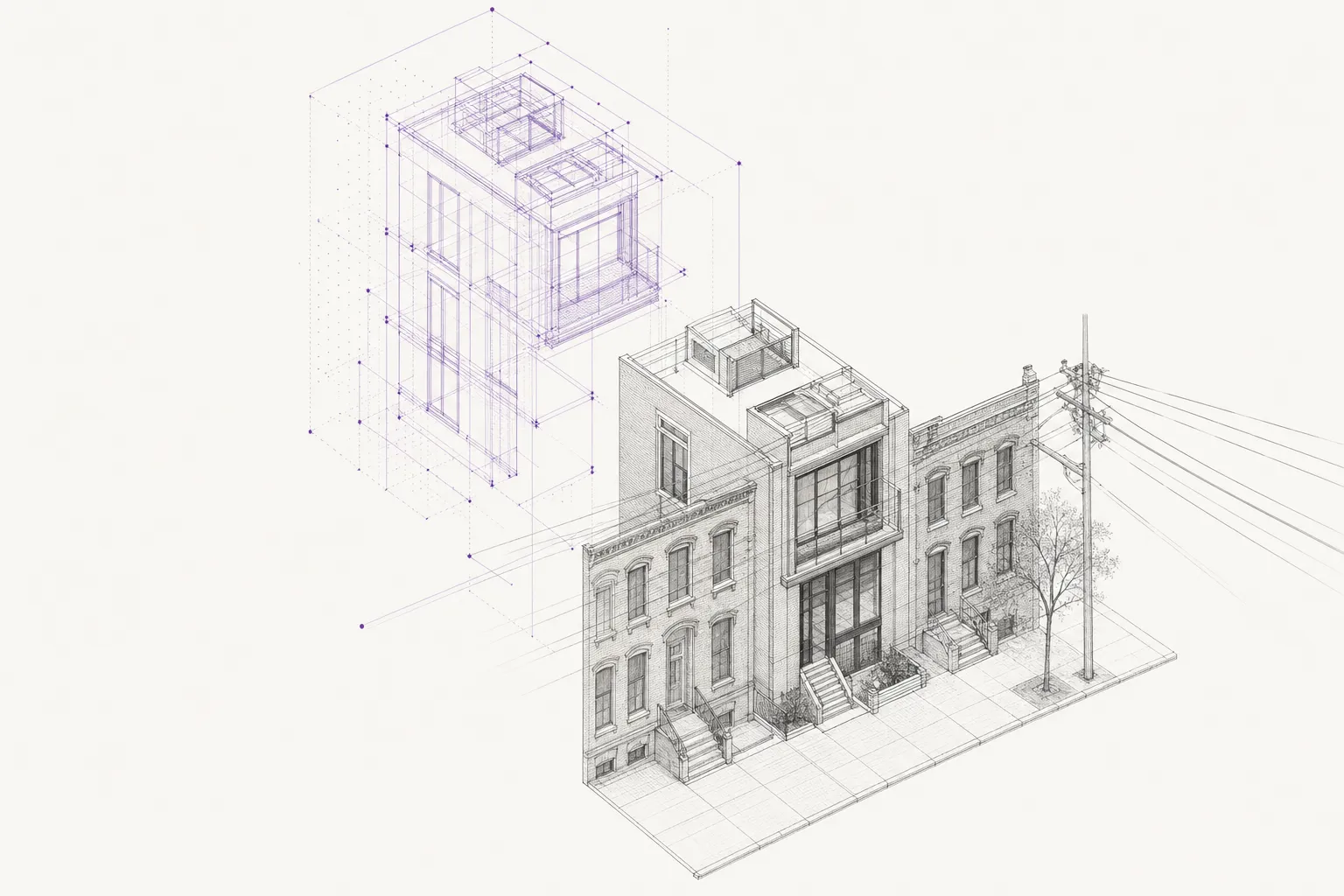
That price point is not a future state anyone needs to build toward. It has been the market rate for years, it reaches the whole country, and the output of it is visible on every arterial road in every tier-two city. The access problem in Indian home design was solved by ordinary commerce some time ago. What was never solved is the thing that would have made solving it matter.
The supply side was built a decade ago
NakshaDekho has been selling house plans, elevations and vaastu consultation online since 2009, and claims work across more than 150 Indian cities. MakeMyHouse has operated since 2015 across 60-plus cities, with floor plans from ₹3,999 and full packages including 3D elevation and structural drawings running from ₹8,999 to ₹49,999, delivered in seven to ten working days with no site visit at any point. 360Plot sells a 3D elevation with plan from ₹1,999, flat-priced up to 1,200 square feet, with home visits billed separately. Platforms like HouseGyan and Nakshewala cover the same ₹1,999 price point. Below all of them sit freelancers on the general marketplaces, doing AutoCAD plans and Lumion elevations at whatever the buyer will pay.
Sitting above that layer is a cement company. UltraTech Building Solutions operates roughly 4,400 outlets, the largest network of home-building stores in the country. Its Utec app has been live since 2019 and pulls around 140,000 downloads a month. Through it a household can buy a 2D layout, an on-demand 3D elevation, a VR walkthrough of a house that does not exist yet, a vaastu consultation, waterproofing, anti-termite treatment, a home construction loan, and an introduction to a local architect, engineer or contractor.
That is a fully assembled stack: design, visualisation, compliance drawings, finance and trade referral, distributed through a channel that reaches every district in India and extends credit at the counter.
The AI layer is already stacked on top of it
Ongrid Design runs a free India-built AI elevation generator aimed squarely at the 30x40 east-facing plot. HomeDesigns.AI and AI Two are chasing the same user, the latter claiming over 300,000. Maket reported more than a million registered users by early 2026. DesignDrafter sells AI layout generation to Indian architects at ₹49,999 a month.
The most revealing thing in that market is the funnel Ongrid recommends to its own users: generate sketches with the AI tool in sixty seconds, then hand those sketches to a human studio as a visual brief when you want construction-ready drawings. The vendor closest to the problem treats its own generated output as an input to the real work rather than the deliverable.
Which is correct, and it is the whole subject.
Distribution is the only durable moat, and it is taken
The clearest demonstration of what the channel is worth came from an adjacent category. Grasim put ₹10,000 crore into Birla Opus and took roughly 7 percent of the decorative paint market in its first full year, tripling the most optimistic analyst forecasts, inside an oligopoly that had been stable for decades. It did this on dealer economics (margins of 12 to 16 percent against the incumbent's 4, credit terms of 12 to 45 days against 5) delivered through the UltraTech cement distribution network. Analysts covering the sector attribute the result to distribution rather than product.
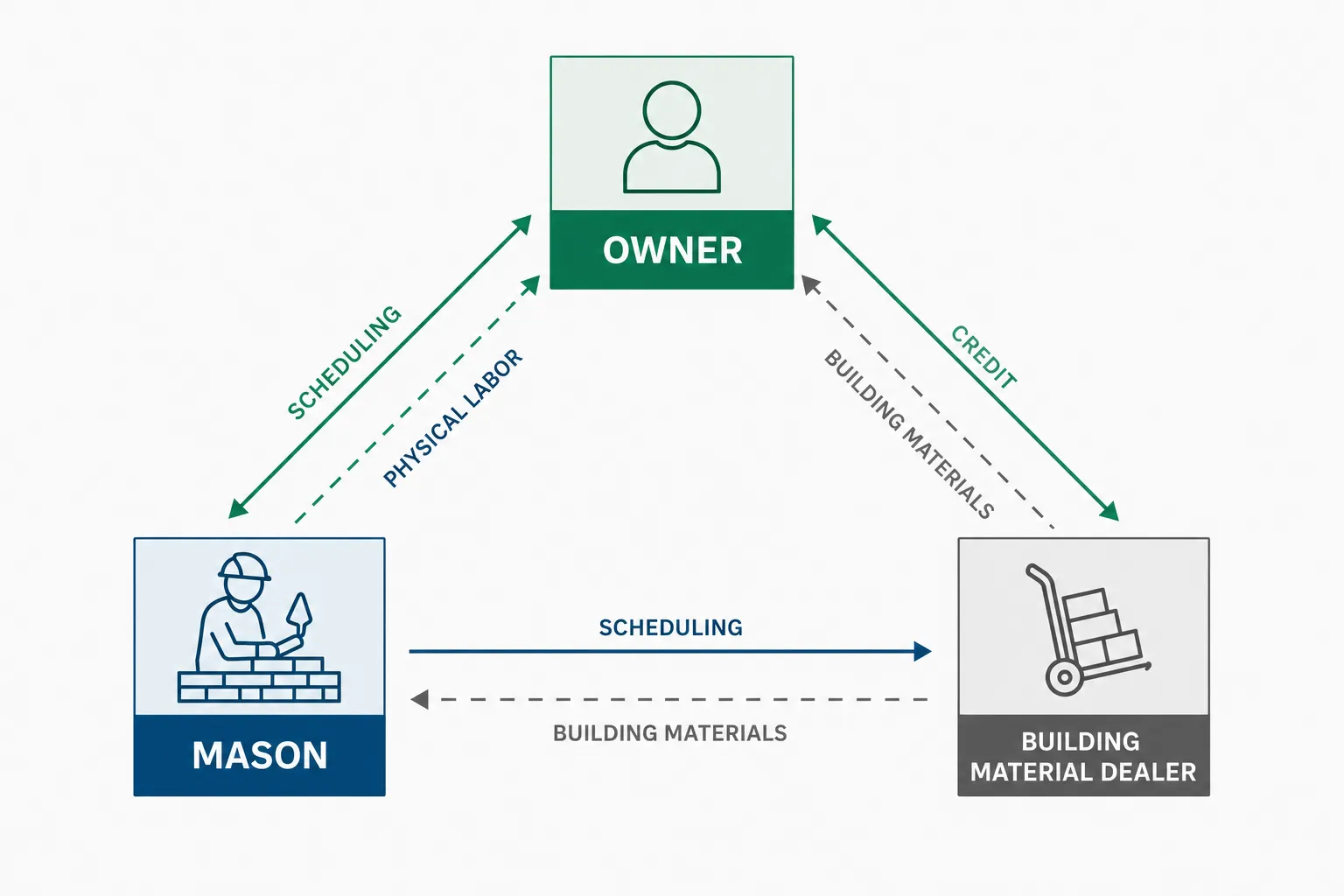
The decision unit for a self-built Indian house is not the homeowner alone. It is a triangle of owner, mason or contractor, and material dealer, and the dealer is the one extending credit and effectively scheduling the build. Any attempt to reach that homeowner directly is buying attention from someone the dealer already sees weekly and already lends to.
So the two things a newcomer would normally compete on, price and reach, are both closed. Design is at ₹1,999 and the shelf belongs to a cement company.
The product being sold is a picture
Here is where the market breaks, and it is a structural break rather than a quality-of-execution complaint.
A buyer commissioning a house design cannot evaluate it. They can evaluate the render. The building it describes will not exist for eighteen months, by which point roughly thirty lakh rupees have been spent and nothing is reversible. Design quality is unobservable before purchase and unfixable after it.
Given that, competition runs on the image. Every rupee of marginal effort goes into making the render persuasive, because the render is the only thing in the transaction that anyone can assess. Nothing flows toward the parts of the design that determine whether the house works, because no buyer can price them and no seller is punished for skipping them.
The user reviews say it without any theoretical framing. One Utec customer, out ₹5,600, reports being shown sample work by a capable architect and then handed a design from someone else entirely. That is not a service failure. That is the equilibrium behaviour of a lemons market, and the samples-versus-delivery split is exactly what adverse selection looks like from the buyer's side.
What the ₹1,999 price actually buys out
At that price there is no site visit. 360Plot charges for one separately, which is the honest version of what every player in the segment is doing.
So the inputs are whatever fits in a web form: plot dimensions, facing direction, number of floors, a budget band, a style picked from a gallery, and a vaastu preference. Everything that determines whether a building is any good sits outside that form. What is already built on either side. Where the afternoon sun lands in May. What the local mason can execute without supervision. How this family actually cooks and where they sit in the evening. Whether the facade will hold or streak after two monsoons. How the house will be extended in nine years when the second floor gets built.
None of that is in the input set. The designer is not being lazy and is not unskilled. They have been handed six fields and asked to produce a building.
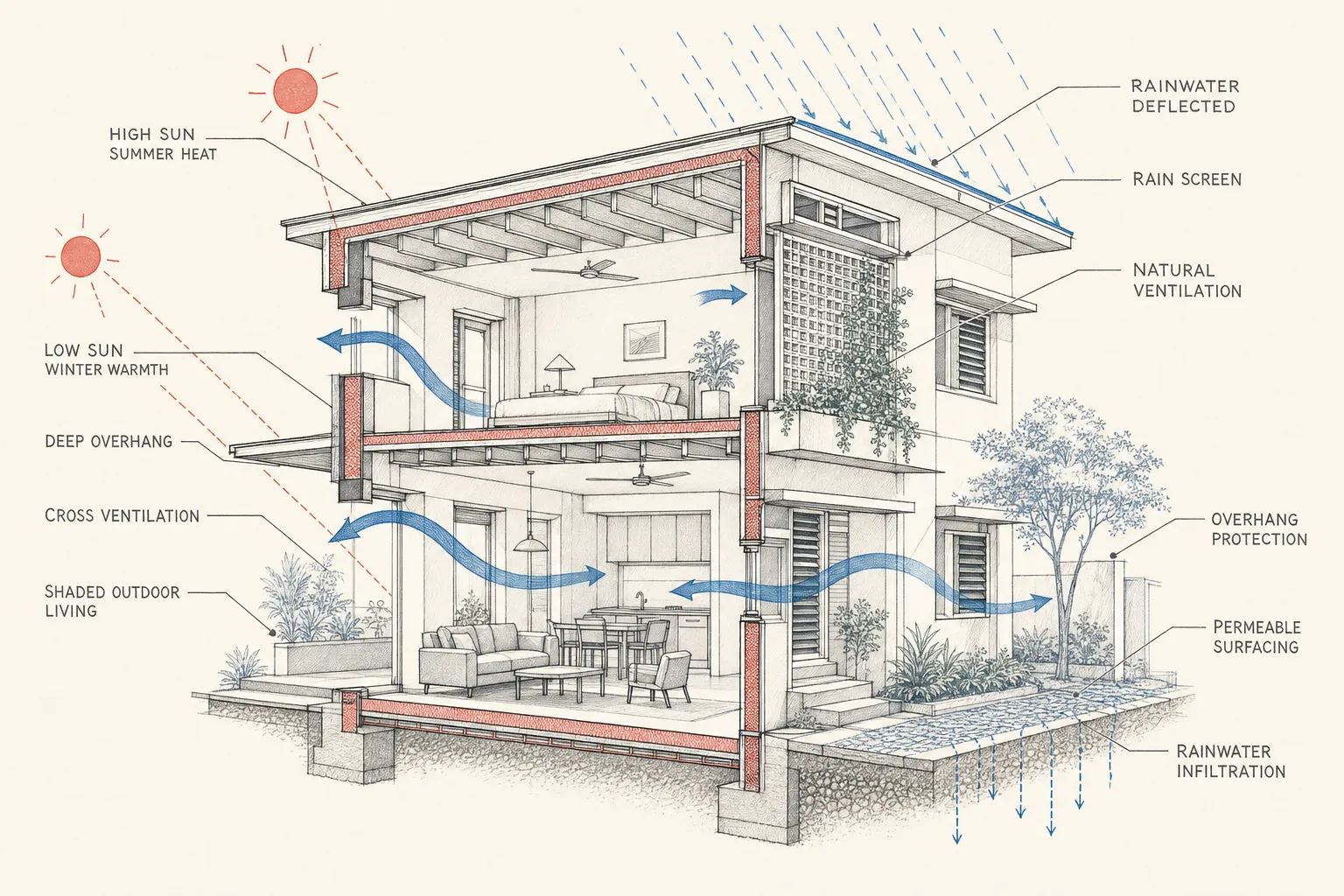
This is why the output converges. Given identical impoverished inputs, every supplier in the category produces the same house, and the only remaining variable is the colour. A buyer who asks for changes gets the same massing in a different palette, because the palette is the only thing the brief actually specified.
The unsolved problem is verification, not generation
Generating a plausible Indian house elevation is finished work. It was finished before the current AI tools arrived and those tools have mostly made it faster and free. Nothing further is gained by driving that cost from ₹1,999 to zero.
What nobody sells is an assurance that the thing is good when the designer is not in the room. That decomposes into three specific problems, none of which is a rendering problem.
Getting context in cheaply. A phone walk-through of the plot, the street and the neighbours costs the homeowner four minutes and would carry more decision-relevant information than every field in the current intake form combined. The capture technology is sitting in the buyer's pocket and the category is not using it.
Constraining output to what will actually get built. A design is only as good as its worst-executed detail, and the executor is a mason working from a printout with no one supervising. Output that cannot survive that translation is not a design, it is a picture of one.
Paying for the result rather than the drawing. As long as the fee clears on delivery of a render, the render is what gets optimised. Any mechanism that ties part of the payment to the built outcome changes what the supplier invests in, and does so without anyone needing to be more virtuous.
Whatever gets built here has to ride the dealer channel, because that is who holds the customer relationship and the credit line. A better product going direct will lose to a worse product on the shelf, which is the lesson the paint market just finished teaching at a cost of ten thousand crore.
Design reached every district in the country. Judgement did not travel with it.