
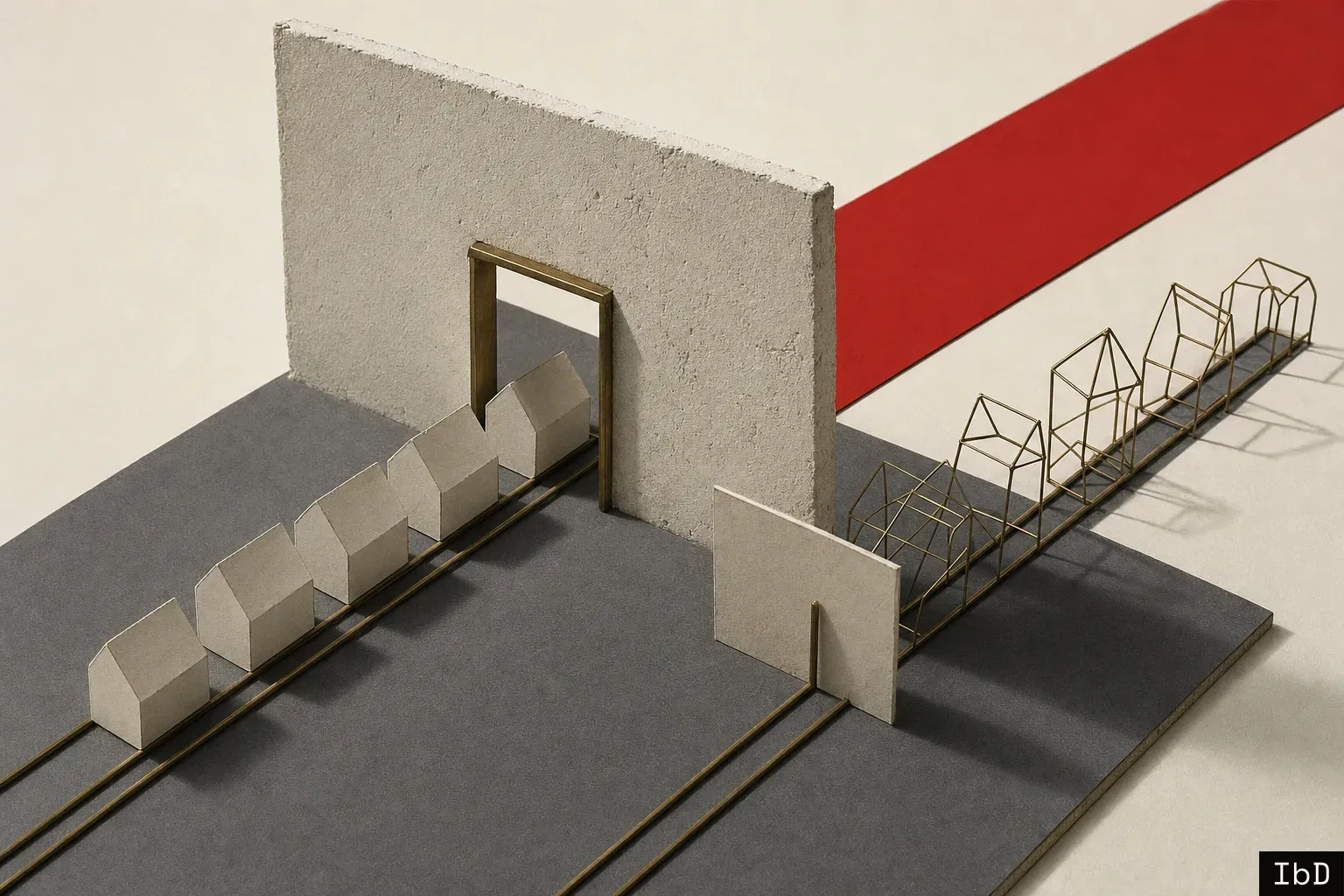
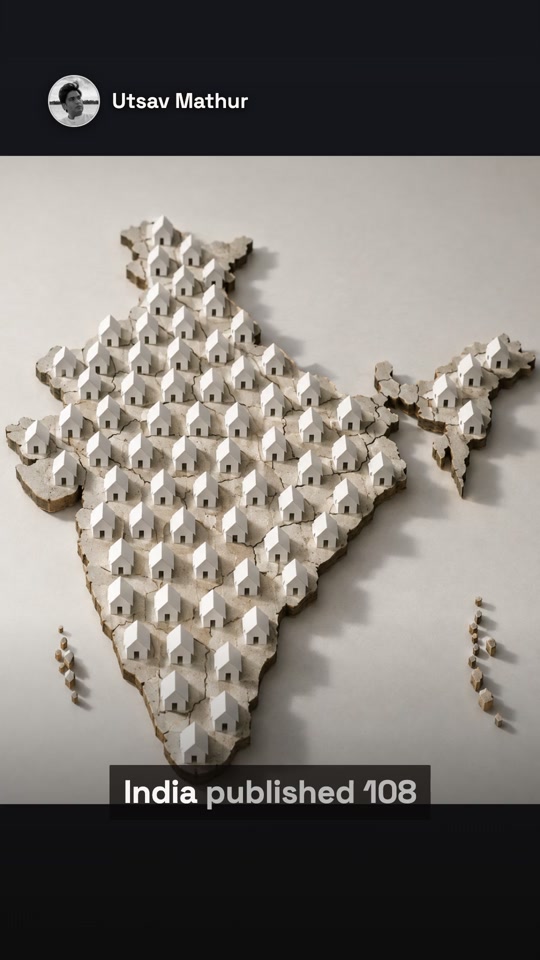
The Ministry of Rural Development published 108 house designs covering 62 housing zones across 15 states, developed with IIT Delhi and the UNDP and vetted by the Central Building Research Institute. Nearly three crore rural houses have been built since. Almost none of them used one.
The compendium is called PAHAL, it came out in 2017, and the standard reading of what happened to it is wrong. This was not a case of government producing something and forgetting about it.
PAHAL did the design half, and the soft measures too
The studies ran across 18 states, with UNDP and IIT Delhi covering different sets and CSIR-CBRI validating the output. The typologies were built around local materials, local hazard exposure, local skills and local building culture, with the stated aim of at least one representative design per housing zone. A second volume followed.
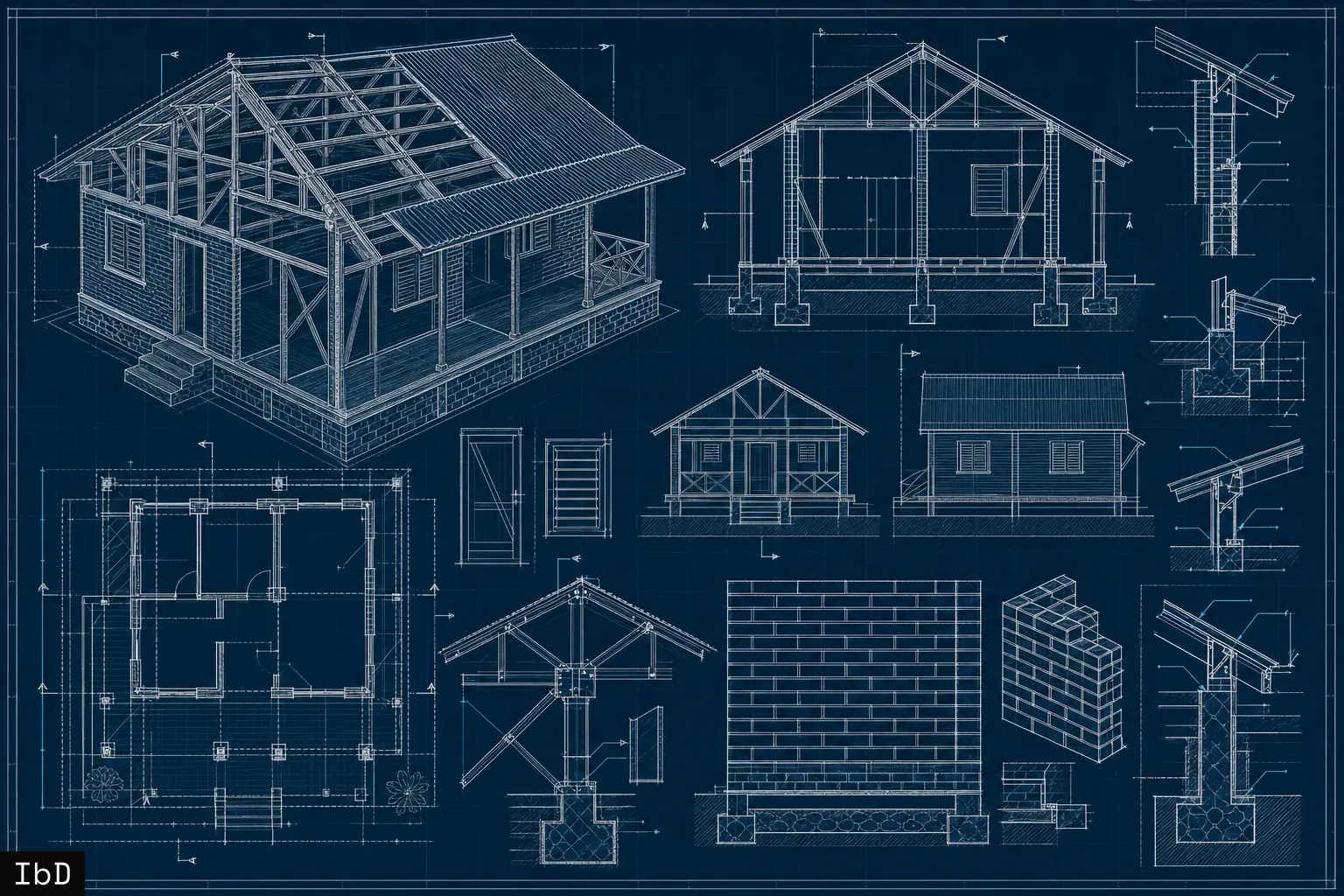
The Ministry then did the things a reasonable person would do next. PAHAL and PAHAL-2 were uploaded to the PMAY-G website. Both were formally shared with States and Union Territories for adoption and popularisation. The Ministry issued separate guidelines for constructing demonstration houses, specifically so that beneficiaries could see a PAHAL house standing up and be moved to adopt one.
Meanwhile PMAY-G crossed roughly three crore completed houses by March 2026, against a target raised to 4.95 crore by 2029. Each of those households received between ₹1.20 and ₹1.30 lakh by direct transfer and built the house themselves.
Publishing, sharing, demonstrating and popularising all happened. What never happened was attaching the design to something the household already wanted. A beneficiary with money in their account and a mason standing in the yard had no reason to open a compendium, and did not.
The permit is the only thing every building passes through
Nothing else touches them all. Not an architect, who reaches a low single-digit percentage of Indian dwellings. Not a bank, given how little of self-construction is formally financed. Not a dealer, who sees the materials and not the drawing.
Plan sanction does. One counter, one file, one moment at which the state and the building are in the same room. If a government wants any influence at all over what gets built, that moment is the entire inventory of opportunity.
Which is what makes the current direction of reform worth looking at closely.
Telangana has already given the permit away
Under TG-bPASS, framed in line with the Telangana Municipalities Act 2019 and passed by the Assembly in September 2020, a residential plot up to 75 square yards with ground or ground-plus-one construction up to seven metres needs no building permission and no occupancy certificate. The applicant registers online with a token payment of one rupee.
From 75 square yards up to 500 square metres and ten metres in height, building permission is granted instantly through online self-certification. Above that, and for non-residential work, a single-window process runs to 21 days, with the application deemed approved on the twenty-second.1 The applicant declares at the point of application that if the information is wrong or the rules are violated, the authorities may demolish the construction without notice. A district-level committee under the Collector handles post-verification and enforcement, and approvals are published for public objection.
The minister who introduced the bill said at the time that no other government in the country had done this. That was true, and the reform itself is defensible. Permit delay is a regressive tax that falls hardest on households with the least cash to carry through a stalled site, and the discretionary scrutiny it replaced was a corruption surface rather than a quality mechanism.
But the speed was handed over with nothing attached to it. The one moment when the state had contact with every building under 500 square metres is now a one rupee receipt.
The exchange only exists while the wait does
The instrument is simple enough to describe in a sentence. A state publishes a library of pre-scrutinised schemes for its standard plot sizes. Adopt one unmodified and sanction is same-day. Modify it, or bring your own drawing, and you join the normal queue.
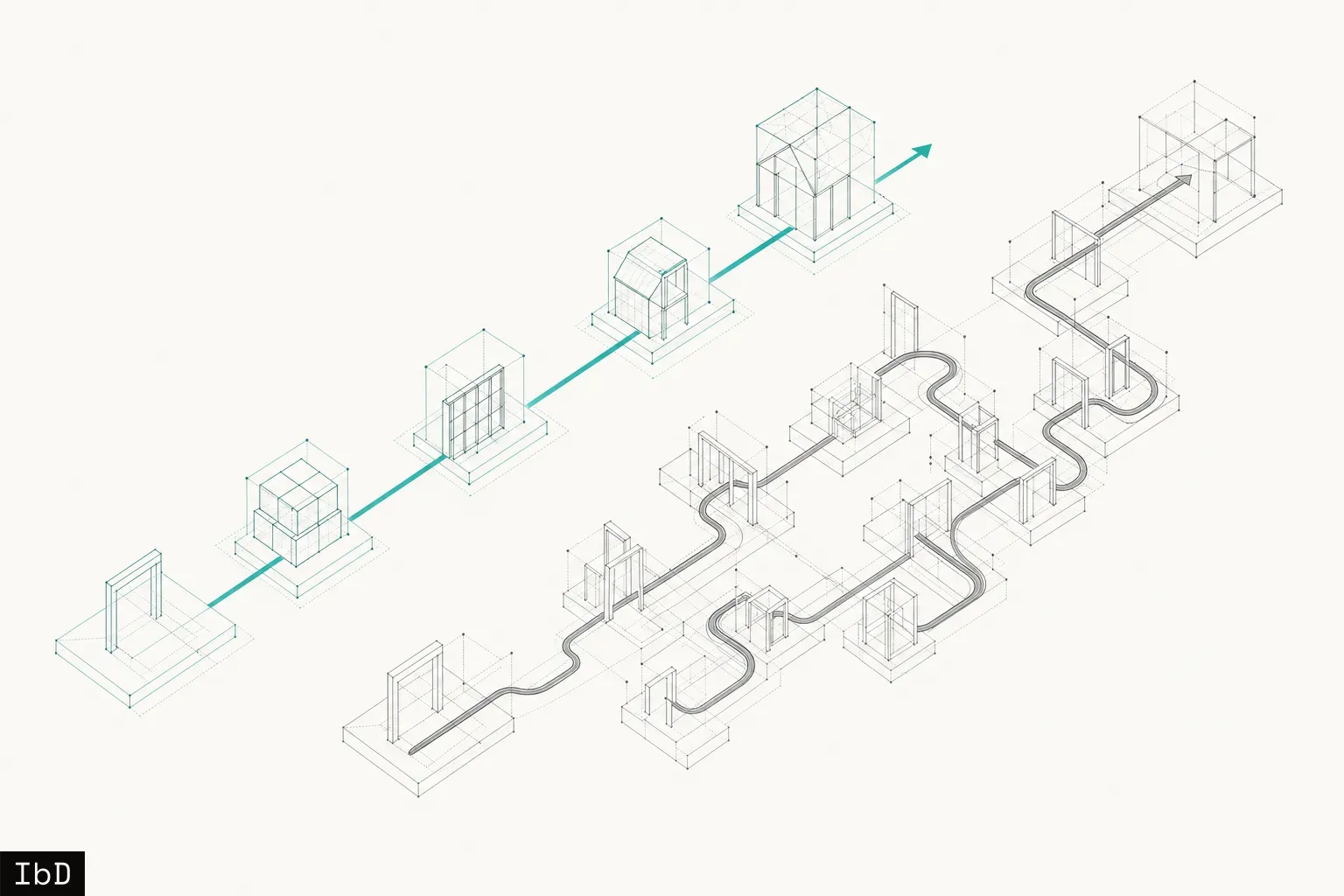
The household is not being sold a nice house. It is being sold certainty and time, which is what it actually wants, and the design arrives attached to that. This is precisely the mechanism PAHAL lacked, and it is the only reason to expect a different result.
It also only works where a queue still exists. In Telangana, below 500 square metres, it no longer does. In most other states it still does, for now, and the ease-of-business reforms that everyone is correctly pushing will close that window state by state over the next several years.
That is the thing worth saying to a state urban department this year rather than in five. The waiting time at the permit counter is an asset nobody has priced, and it is currently being given away for free by governments that have no idea they are holding anything.
Where the permit has already gone, two residues remain
The registration touchpoint survives. Every builder on a sub-75-yard plot in Telangana still arrives at a portal to pay their rupee. That is a distribution moment even with no condition attached to it, and putting a design library on the same screen costs nothing and obliges nobody.
Post-verification survives too. The district committee under the Collector has authority after the fact, which is weaker than authority before it and generates conflict rather than cooperation, but it is not nothing.
The larger answer is to move upstream. Plot grain, build-to line and use mix are fixed at layout approval rather than building approval. That is a far smaller number of files, it has not been deregulated anywhere, and it determines more about how a street will look than any individual elevation does.
Sequence, for anyone in a position to do this
Publish the schemes before removing the wait. Once sanction is instant, there is nothing left to trade. Any state currently drafting a single-window reform has a window of months, not years, to build the exchange into it rather than bolting it on afterwards.
Attach the design to time, never to an appeal. PAHAL was distributed on the strength of being good, regionally appropriate and disaster-resilient, all of which it is. Three crore households declined anyway. The offer has to be worth something to the person receiving it on the day they receive it.
Put it where the transaction happens. A ministry website is where documents go to be cited. The permit portal is where builders go because they have to.
The permit counter is the one place every Indian builder turns up anyway. It is being dismantled, correctly, before anyone thought to use it.
Footnotes
-
"There will be single window approval within 21 days for all layouts/buildings in plots above 600 square yards and height above 10 metres. On the 22nd day, the application will be deemed approved." — The News Minute, Telangana Assembly passes TS-bPASS Bill allowing self-certification of buildings (2020-09-15). ↩